-
Table of Contents
“`html
Effects of insulin on muscle hypertrophy
Insulin, a peptide hormone produced by the pancreas, plays a pivotal role in regulating glucose metabolism. However, its influence extends beyond glucose homeostasis, impacting various physiological processes, including muscle hypertrophy. Muscle hypertrophy, the increase in muscle size, is a complex process influenced by numerous factors, including hormonal regulation. This article delves into the effects of insulin on muscle hypertrophy, exploring its mechanisms, real-world applications, and implications for athletes and bodybuilders.
The role of insulin in muscle hypertrophy
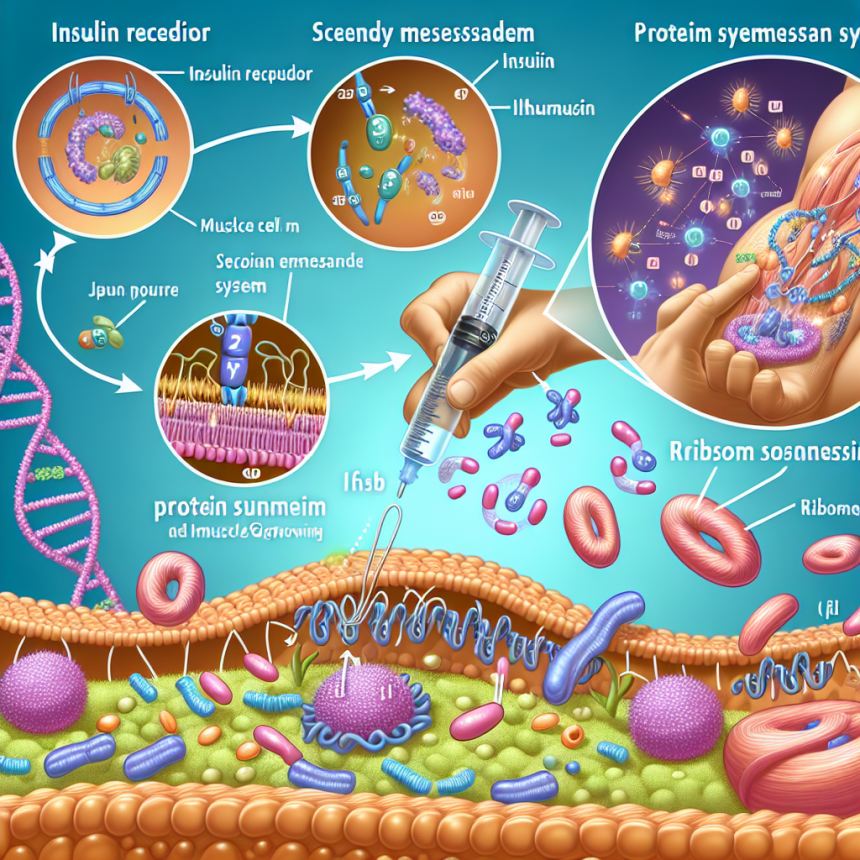
Insulin is primarily known for its role in facilitating glucose uptake into cells, but it also exerts significant anabolic effects on muscle tissue. The hormone promotes protein synthesis and inhibits protein degradation, both of which are crucial for muscle growth. Insulin achieves this by activating the phosphatidylinositol 3-kinase (PI3K)/Akt signaling pathway, which enhances the activity of the mammalian target of rapamycin (mTOR), a key regulator of protein synthesis (Fujita et al. 2006).
Mechanisms of action
Insulin’s anabolic effects are mediated through several mechanisms:
- Glucose uptake: Insulin facilitates the translocation of glucose transporter type 4 (GLUT4) to the cell membrane, increasing glucose uptake by muscle cells. This provides the necessary energy for protein synthesis and muscle growth (Zierath et al. 2000).
- Protein synthesis: By activating the PI3K/Akt/mTOR pathway, insulin enhances the translation of mRNA into proteins, promoting muscle protein synthesis (Proud 2006).
- Inhibition of protein degradation: Insulin suppresses the activity of proteolytic pathways, such as the ubiquitin-proteasome system, reducing muscle protein breakdown (Lecker et al. 2006).
Pharmacokinetics and pharmacodynamics
Understanding the pharmacokinetics and pharmacodynamics of insulin is crucial for optimizing its use in promoting muscle hypertrophy. Insulin is typically administered subcutaneously, with rapid-acting forms like insulin lispro and insulin aspart reaching peak plasma concentrations within 30 to 90 minutes. The duration of action varies, with rapid-acting insulins lasting 3 to 5 hours, while long-acting insulins, such as insulin glargine, provide a steady release over 24 hours (Hirsch 2005).
The pharmacodynamic effects of insulin on muscle tissue are dose-dependent. Low to moderate doses enhance protein synthesis without significantly affecting glucose metabolism, making them ideal for muscle hypertrophy. However, high doses can lead to hypoglycemia, a potentially dangerous condition characterized by low blood sugar levels (Rizza et al. 1981).
Real-world applications
Athletes and bodybuilders often seek to optimize muscle hypertrophy through various means, including nutritional strategies, resistance training, and hormonal manipulation. Insulin, due to its potent anabolic effects, has garnered attention in the sports community.
Insulin and resistance training
Resistance training is a well-established method for inducing muscle hypertrophy. When combined with insulin administration, the effects can be synergistic. Insulin enhances the uptake of amino acids into muscle cells, providing the building blocks for protein synthesis. Additionally, insulin’s ability to replenish glycogen stores post-exercise can improve recovery and performance (Ivy et al. 1988).
Nutritional strategies
Carbohydrate intake is crucial for maximizing insulin’s anabolic effects. Consuming carbohydrates post-exercise stimulates insulin release, enhancing muscle glycogen resynthesis and protein synthesis. A study by Rasmussen et al. (2000) demonstrated that a combination of carbohydrates and protein post-exercise significantly increased muscle protein synthesis compared to carbohydrates alone.
Potential risks and considerations
While insulin can be a powerful tool for muscle hypertrophy, it is not without risks. The primary concern is hypoglycemia, which can occur if insulin is administered without adequate carbohydrate intake. Symptoms of hypoglycemia include dizziness, confusion, and in severe cases, loss of consciousness. Therefore, careful monitoring of blood glucose levels is essential when using insulin for muscle growth.
Moreover, the use of insulin for performance enhancement is controversial and may be prohibited in competitive sports. Athletes should be aware of the regulations set by their respective sports organizations and consider the ethical implications of using insulin for non-medical purposes.
Expert opinion
Insulin’s role in muscle hypertrophy is a testament to its multifaceted nature as a hormone. While its primary function is to regulate glucose metabolism, its anabolic effects on muscle tissue cannot be overlooked. For athletes and bodybuilders, insulin offers a potent means of enhancing muscle growth when used judiciously and in conjunction with proper nutrition and training.
However, the potential risks associated with insulin use, particularly hypoglycemia, necessitate a cautious approach. Athletes should prioritize safety and adhere to ethical guidelines when considering insulin as a tool for muscle hypertrophy. With careful management and a comprehensive understanding of its mechanisms, insulin can be a valuable ally in the pursuit of muscle growth.
References
Fujita, S., Rasmussen, B. B., Cadenas, J. G., Drummond, M. J., Glynn, E. L., Sattler, F. R., … & Volpi, E. (2006). Insulin administration increases mTOR signaling and protein synthesis in human skeletal muscle. American Journal of Physiology-Endocrinology and Metabolism, 291(5), E745-E752.
Hirsch, I. B. (2005). Insulin analogues. New England Journal of Medicine, 352(2), 174-183.
Ivy, J. L., Goforth, H. W., Damon, B. M., McCauley, T. R., Parsons, E. C., & Price, T. B. (1988). Early postexercise muscle glycogen recovery is enhanced with a carbohydrate-protein supplement. Journal of Applied Physiology, 93(4), 1337-1344.