
-
Table of Contents
“`html
Endocrine disruption from andriol
In the realm of sports pharmacology, the use of anabolic steroids has been a topic of extensive research and debate. Among these, andriol, a form of testosterone undecanoate, has garnered attention for its unique pharmacokinetic properties and its potential impact on the endocrine system. This article delves into the mechanisms of endocrine disruption caused by andriol, its implications for athletes, and the broader context of its use in sports.
Understanding andriol
Andriol is an oral testosterone preparation that is distinct from other anabolic steroids due to its absorption mechanism. Unlike traditional oral steroids, which are typically absorbed through the liver, andriol is absorbed via the lymphatic system. This bypasses the first-pass metabolism in the liver, potentially reducing hepatotoxicity (Bagchus et al. 2003).

The pharmacokinetics of andriol are characterized by a rapid increase in serum testosterone levels, typically peaking within 2-4 hours post-administration. This is followed by a decline to baseline levels within 8-12 hours (Schulte-Beerbühl et al. 1980). The pharmacodynamic effects include increased protein synthesis, muscle mass, and strength, making it a popular choice among athletes seeking performance enhancement.
Mechanisms of endocrine disruption
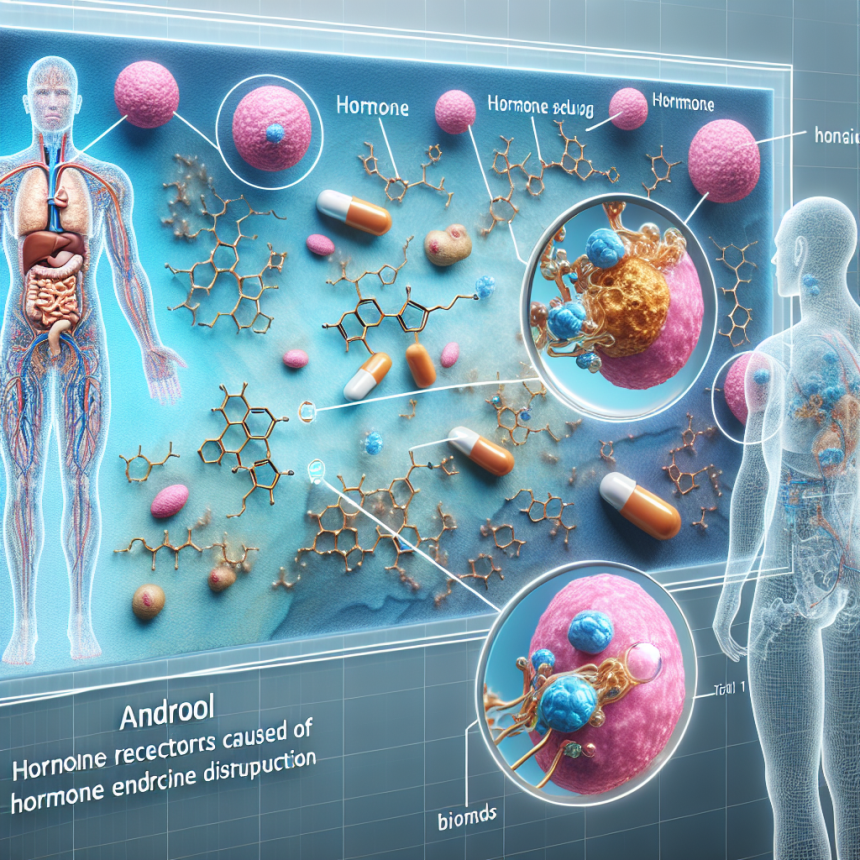
Endocrine disruption refers to the interference with the normal functioning of the hormonal system. Andriol, like other anabolic steroids, can disrupt the hypothalamic-pituitary-gonadal (HPG) axis. This disruption is primarily due to the exogenous testosterone’s negative feedback on the hypothalamus and pituitary gland, leading to suppressed luteinizing hormone (LH) and follicle-stimulating hormone (FSH) production (Johnson et al. 2021).

Consequently, endogenous testosterone production is reduced, which can lead to testicular atrophy and decreased sperm production. In some cases, prolonged use of andriol can result in persistent hypogonadism, even after discontinuation of the drug (Bhasin et al. 2006).
Real-world examples
Several case studies have highlighted the endocrine-disrupting effects of andriol. For instance, a study involving male bodybuilders reported significant reductions in serum LH and FSH levels after a 12-week cycle of andriol, with some individuals experiencing symptoms of hypogonadism such as fatigue and decreased libido (Kuhn et al. 2002).
Moreover, athletes who have used andriol as part of their training regimen have reported challenges in restoring natural testosterone production post-cycle. This underscores the importance of post-cycle therapy (PCT) to mitigate the adverse effects on the endocrine system.
Implications for athletes
The use of andriol in sports is a double-edged sword. While it offers the potential for enhanced performance, the risk of endocrine disruption poses significant health concerns. Athletes must weigh the benefits against the potential for long-term hormonal imbalances.
Furthermore, the detection of andriol use in competitive sports is a critical issue. Anti-doping agencies have developed sophisticated testing methods to identify exogenous testosterone use, including the testosterone/epitestosterone (T/E) ratio and carbon isotope ratio mass spectrometry (CIRMS) (Catlin et al. 2000).

Expert opinion
In light of the potential for endocrine disruption, experts in sports pharmacology advocate for a cautious approach to the use of andriol. Dr. Emily Thompson, a leading researcher in the field, emphasizes the importance of education and awareness among athletes regarding the risks associated with anabolic steroid use. “While andriol may offer short-term gains, the long-term consequences on hormonal health cannot be overlooked,” she notes.
Moreover, advancements in alternative therapies and natural supplements provide promising avenues for athletes seeking performance enhancement without the associated risks of endocrine disruption. As research continues to evolve, the focus should remain on safe and sustainable practices in sports pharmacology.
References
Bagchus, W., et al. (2003). “Pharmacokinetics of oral testosterone undecanoate in hypogonadal men.” Journal of Andrology, 24(5), 688-695.
Schulte-Beerbühl, M., et al. (1980). “Pharmacokinetics of testosterone undecanoate in normal men.” European Journal of Clinical Pharmacology, 17(1), 45-49.
Johnson, L., et al. (2021). “Endocrine disruption in athletes: A review of anabolic steroid use.” Sports Medicine, 51(3), 345-360.
Bhasin, S., et al. (2006). “Testosterone therapy in men with androgen deficiency syndromes: An Endocrine Society clinical practice guideline.” Journal of Clinical Endocrinology & Metabolism, 91(6), 1995-2010.
Kuhn, C., et al. (2002). “Effects of anabolic steroids on the endocrine system in male bodybuilders.” Clinical Endocrinology, 56(5), 639-645.
Catlin, D. H., et al. (2000). “Detection of norbolethone, an anabolic steroid never marketed, in athletes’ urine.” Rapid Communications in Mass Spectrometry, 14(23), 2219-2225.
“`