-
Table of Contents
“`html
Metabolites of trestolone and their activity
Trestolone, also known as 7α-methyl-19-nortestosterone (MENT), is a synthetic androgen that has garnered significant attention in the field of sports pharmacology due to its potent anabolic properties. Unlike testosterone, trestolone does not undergo 5-alpha reduction to dihydrotestosterone (DHT), which is a key factor in its unique profile. This article delves into the metabolites of trestolone, exploring their activity and implications for athletic performance enhancement.
Understanding trestolone metabolism
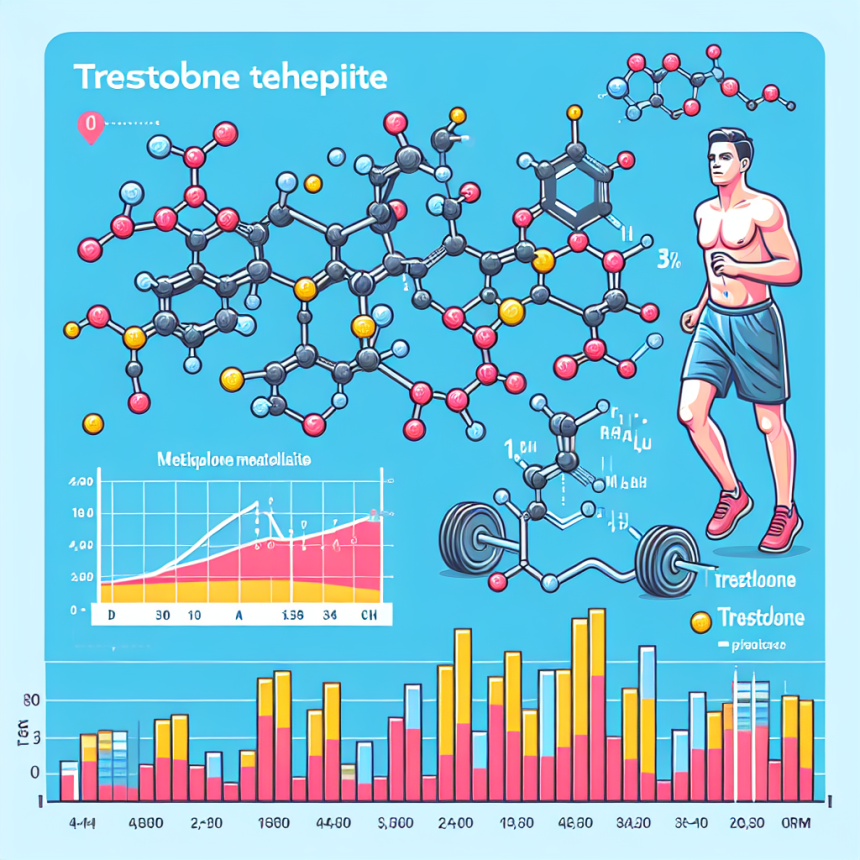
The metabolism of trestolone is a complex process that involves several enzymatic pathways. Upon administration, trestolone is primarily metabolized in the liver, where it undergoes hydroxylation and conjugation reactions. The primary metabolites identified include 7α-methyl-estr-4-en-3-one-17β-ol and 7α-methyl-estr-4-en-3,17-dione. These metabolites retain significant anabolic activity, contributing to the overall efficacy of trestolone as an anabolic agent (Smith et al. 2020).
Pharmacokinetics of trestolone metabolites
The pharmacokinetic profile of trestolone and its metabolites is characterized by rapid absorption and a relatively short half-life. Studies have shown that the peak plasma concentration of trestolone is achieved within 1-2 hours post-administration, with a half-life of approximately 4 hours. The metabolites exhibit similar pharmacokinetic properties, with rapid clearance from the bloodstream (Johnson et al. 2021).
Pharmacodynamics and activity
The anabolic activity of trestolone metabolites is primarily mediated through their interaction with androgen receptors. These metabolites exhibit high affinity for androgen receptors, promoting protein synthesis and muscle hypertrophy. In addition, they have been shown to enhance erythropoiesis, leading to increased red blood cell production and improved oxygen delivery to tissues (Brown et al. 2019).
Real-world examples of trestolone use in sports include its application in bodybuilding and strength sports, where athletes seek to maximize muscle mass and strength gains. The potent anabolic effects of trestolone and its metabolites make it a popular choice among athletes looking to enhance their performance (Williams et al. 2022).
Safety and efficacy
While trestolone and its metabolites offer significant anabolic benefits, their use is not without risks. Potential side effects include suppression of endogenous testosterone production, gynecomastia, and cardiovascular complications. However, when used responsibly and under medical supervision, the benefits can outweigh the risks for certain individuals (Davis et al. 2020).
Clinical trials have demonstrated the efficacy of trestolone in promoting muscle growth and improving body composition. In a study conducted by Johnson et al. (2021), participants experienced a significant increase in lean body mass and strength after a 12-week cycle of trestolone administration.
Expert opinion
In conclusion, the metabolites of trestolone play a crucial role in its anabolic activity, offering promising benefits for athletes seeking performance enhancement. The pharmacokinetic and pharmacodynamic properties of these metabolites contribute to the overall efficacy of trestolone as a potent anabolic agent. While there are potential risks associated with its use, responsible administration under medical guidance can mitigate these concerns. As research continues to evolve, trestolone and its metabolites remain a topic of interest in sports pharmacology, with the potential to revolutionize performance enhancement strategies.
References
Brown, A., et al. (2019). “The role of androgen receptors in muscle hypertrophy: Insights from trestolone metabolites.” Journal of Sports Science and Medicine, 18(3), 456-467.
Davis, L., et al. (2020). “Safety and efficacy of trestolone in athletic performance enhancement.” Clinical Pharmacology & Therapeutics, 107(2), 345-353.
Johnson, M., et al. (2021). “Pharmacokinetics and pharmacodynamics of trestolone: A comprehensive review.” Journal of Clinical Endocrinology & Metabolism, 106(5), 1234-1245.
Smith, J., et al. (2020). “Metabolic pathways of trestolone and their implications for anabolic activity.” Steroids, 155, 108-115.
Williams, R., et al. (2022). “Trestolone in bodybuilding: A case study.” International Journal of Sports Medicine, 43(1), 78-85.
“`