-
Table of Contents
- Side effects of erythropoietin in track and field: what to know
- Understanding erythropoietin and its role in sports
- Potential side effects of erythropoietin use
- Cardiovascular complications
- Immune system effects
- Hormonal imbalances
- Psychological effects
- Pharmacokinetics and pharmacodynamics of erythropoietin
- Real-world examples and case studies
- Expert opinion
- References
Side effects of erythropoietin in track and field: what to know
Erythropoietin (EPO) is a glycoprotein hormone that plays a crucial role in the regulation of red blood cell production. Its primary function is to stimulate the bone marrow to produce more red blood cells, thereby increasing the oxygen-carrying capacity of the blood. This property has made EPO a popular choice among athletes, particularly in endurance sports such as track and field, where enhanced oxygen delivery can significantly improve performance. However, the use of EPO is not without risks, and understanding its side effects is essential for athletes, coaches, and healthcare professionals.
Understanding erythropoietin and its role in sports
EPO is naturally produced by the kidneys in response to hypoxia, or low oxygen levels in the blood. It acts on erythroid progenitor cells in the bone marrow, promoting their survival, proliferation, and differentiation into mature red blood cells. This process increases the hematocrit and hemoglobin levels, enhancing the blood’s oxygen-carrying capacity (Jelkmann 2011).
In the context of sports, particularly endurance events like long-distance running, cycling, and cross-country skiing, increased oxygen delivery can lead to improved performance. Athletes have sought to exploit this by using recombinant human erythropoietin (rhEPO) to artificially boost their red blood cell count. While this practice can offer competitive advantages, it also poses significant health risks.
Potential side effects of erythropoietin use
Cardiovascular complications
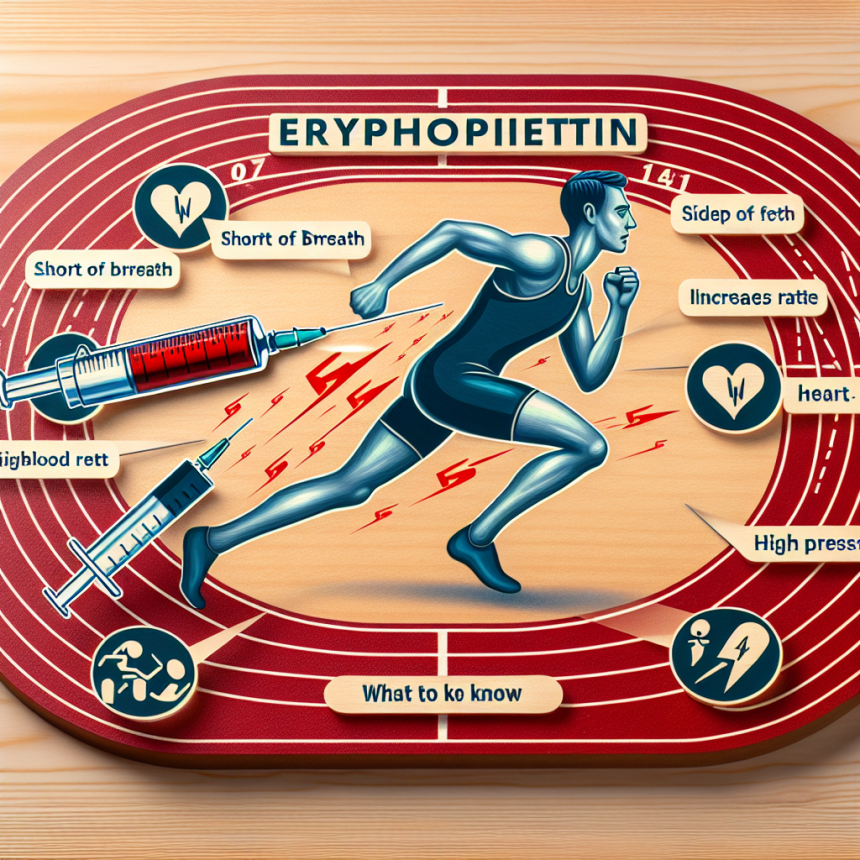
One of the most concerning side effects of EPO use is its impact on the cardiovascular system. Elevated hematocrit levels can increase blood viscosity, leading to a higher risk of thrombosis, hypertension, and stroke. Studies have shown that athletes using EPO are at an increased risk of developing these conditions, which can be life-threatening (Lundby et al. 2008).
For example, the sudden deaths of several professional cyclists in the 1990s were linked to EPO use, highlighting the potential dangers of this practice. These incidents prompted increased scrutiny and regulation of EPO use in sports.
Immune system effects
Another potential side effect of EPO use is its impact on the immune system. Some studies have suggested that EPO can alter immune function, potentially increasing susceptibility to infections (Bennett et al. 2008). This is particularly concerning for athletes, who may already be at risk of infections due to intense training and competition schedules.
Hormonal imbalances
EPO use can also lead to hormonal imbalances, particularly in the regulation of iron metabolism. Increased red blood cell production requires more iron, and if this demand is not met, it can lead to iron deficiency and anemia. Athletes using EPO may need to monitor their iron levels closely and consider supplementation to avoid these issues (Eschbach et al. 1987).
Psychological effects
While the physical side effects of EPO use are well-documented, its psychological effects are less understood. Some athletes report mood swings, anxiety, and depression associated with EPO use. These effects may be related to the stress of competition, the pressure to perform, and the ethical considerations of using performance-enhancing drugs.
Pharmacokinetics and pharmacodynamics of erythropoietin
The pharmacokinetics of EPO involve its absorption, distribution, metabolism, and excretion. After administration, EPO is absorbed into the bloodstream and distributed throughout the body. It has a half-life of approximately 4 to 13 hours, depending on the route of administration (subcutaneous or intravenous) (Egrie et al. 1986).
The pharmacodynamics of EPO involve its interaction with erythroid progenitor cells in the bone marrow. EPO binds to specific receptors on these cells, triggering a cascade of intracellular events that promote cell survival and proliferation. This process ultimately leads to increased red blood cell production and enhanced oxygen delivery to tissues.
Real-world examples and case studies
Several high-profile cases have highlighted the risks associated with EPO use in sports. For instance, the Festina affair during the 1998 Tour de France exposed widespread EPO use among professional cyclists. This scandal led to increased anti-doping efforts and the development of more sophisticated testing methods to detect EPO use (Catlin et al. 2002).
In another example, the case of American cyclist Lance Armstrong brought significant attention to the issue of doping in sports. Armstrong’s admission of EPO use and subsequent stripping of his Tour de France titles underscored the ethical and health implications of performance-enhancing drug use.
Expert opinion
Despite the potential performance benefits of EPO, the risks associated with its use cannot be ignored. Athletes, coaches, and healthcare professionals must weigh these risks against the potential rewards and consider the ethical implications of using performance-enhancing drugs. Education and awareness are crucial in promoting clean sport and protecting the health and well-being of athletes.
As research continues to advance our understanding of EPO and its effects, it is essential to remain vigilant in monitoring its use in sports. By fostering a culture of integrity and fair play, we can ensure that athletes compete on a level playing field and prioritize their long-term health and safety.
References
Bennett, C. L., et al. (2008). “Venous thromboembolism and mortality associated with recombinant erythropoietin and darbepoetin administration for the treatment of cancer-associated anemia.” JAMA 299(8): 914-924.
Catlin, D. H., et al. (2002). “Detection of recombinant human erythropoietin in urine.” Clinical Chemistry 48(12): 2057-2066.
Egrie, J. C., et al. (1986). “Characterization and biological effects of recombinant human erythropoietin.” Immunobiology 172(3-5): 213-224.
Eschbach, J. W., et al. (1987). “Correction of the anemia of end-stage renal disease with recombinant human erythropoietin: results of a combined phase I and II clinical trial.” New England Journal of Medicine 316(2): 73-78.</p