-
Table of Contents
Tribulus terrestris: role in sports pharmacology and muscle recovery
In the realm of sports pharmacology, the quest for natural supplements that enhance performance and expedite recovery is ever-evolving. Among the myriad of botanical candidates, Tribulus terrestris has garnered significant attention. This plant, often associated with traditional medicine, is now being scrutinized for its potential benefits in athletic performance and muscle recovery. This article delves into the pharmacological properties of Tribulus terrestris, its role in sports, and its impact on muscle recovery.
Understanding Tribulus terrestris
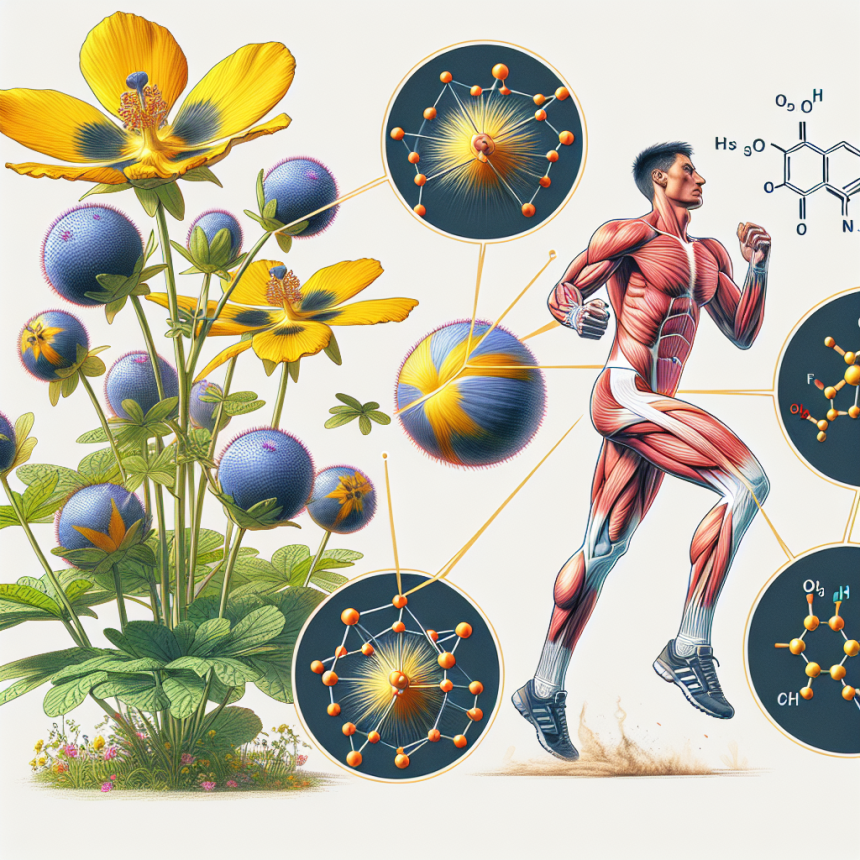
Tribulus terrestris, commonly known as puncture vine, is a plant that thrives in dry climates and is native to regions in Europe, Asia, Africa, and Australia. Traditionally, it has been used in various cultures for its purported health benefits, including enhancing libido and vitality. The active compounds in Tribulus terrestris are primarily saponins, with protodioscin being the most studied for its potential anabolic effects (Gauthaman et al. 2002).

Pharmacokinetics and pharmacodynamics
The pharmacokinetics of Tribulus terrestris involve the absorption, distribution, metabolism, and excretion of its active saponins. Upon ingestion, these compounds are absorbed in the gastrointestinal tract and distributed throughout the body. The metabolism of saponins primarily occurs in the liver, where they are converted into active metabolites that exert physiological effects (Kostova et al. 2005).
Pharmacodynamically, Tribulus terrestris is believed to enhance endogenous testosterone production by stimulating the release of luteinizing hormone (LH) from the pituitary gland. This increase in LH subsequently boosts testosterone synthesis in the testes, potentially leading to improved muscle mass and strength (Brown et al. 2001).
Role in sports pharmacology
In sports pharmacology, Tribulus terrestris is often marketed as a natural alternative to anabolic steroids. Athletes and bodybuilders are drawn to its potential to enhance muscle growth, increase strength, and improve overall athletic performance. Several studies have investigated these claims, with mixed results.
For instance, a study by Rogerson et al. (2007) found that supplementation with Tribulus terrestris did not significantly enhance strength or lean muscle mass in resistance-trained males. However, other research suggests that it may have a positive impact on endurance and recovery, particularly in untrained individuals (Antonio et al. 2000).

Impact on muscle recovery
Muscle recovery is a critical aspect of athletic training, as it allows athletes to perform at their best while minimizing the risk of injury. Tribulus terrestris is believed to aid in muscle recovery by reducing oxidative stress and inflammation, two key factors that contribute to muscle damage and delayed recovery (Milasius et al. 2009).
Research indicates that the antioxidant properties of saponins in Tribulus terrestris can help neutralize free radicals generated during intense physical activity. This reduction in oxidative stress may facilitate faster recovery and reduce muscle soreness (Saleh et al. 2013).
Real-world applications
In practical terms, athletes seeking to incorporate Tribulus terrestris into their regimen should consider several factors. The dosage and duration of supplementation can vary based on individual goals and physiological responses. It is generally recommended to start with a lower dose and gradually increase it while monitoring for any adverse effects.
Moreover, the quality of Tribulus terrestris supplements can vary significantly between manufacturers. Athletes should opt for products that are standardized for saponin content to ensure consistency and efficacy.

Expert opinion
As the interest in natural performance enhancers continues to grow, Tribulus terrestris remains a promising candidate in sports pharmacology. While the scientific community acknowledges its potential benefits, further research is needed to fully elucidate its mechanisms and optimize its use in athletic settings. Athletes considering Tribulus terrestris should do so with a comprehensive understanding of its effects and consult with healthcare professionals to tailor its use to their specific needs.
References
Antonio, J., Uelmen, J., Rodriguez, R., & Earnest, C. (2000). The effects of Tribulus terrestris on body composition and exercise performance in resistance-trained males. Journal of Strength and Conditioning Research, 14(3), 264-270.
Brown, G. A., Vukovich, M. D., Martini, E. R., Kohut, M. L., Franke, W. D., Jackson, D. A., & King, D. S. (2001). Effects of anabolic precursors on serum testosterone concentrations and adaptations to resistance training in young men. International Journal of Sport Nutrition and Exercise Metabolism, 11(3), 349-365.
Gauthaman, K., Adaikan, P. G., & Prasad, R. N. (2002). Aphrodisiac properties of Tribulus terrestris extract (Protodioscin) in normal and castrated rats. Life Sciences, 71(12), 1385-1396.
Kostova, I., & Dinchev, D. (2005). Saponins in Tribulus terrestris – chemistry and bioactivity. Phytochemistry Reviews, 4(2-3), 111-137.
Milasius, K., Dadeliene, R., & Skernevicius, J. (2009). The influence of Tribulus terrestris extract on the parameters of the functional preparedness and athletes’ organism homeostasis.