
-
Table of Contents
“`html
Lipid panel changes from turinabol: hdl, ldl, triglycerides
In the realm of sports pharmacology, the use of anabolic-androgenic steroids (AAS) has been a topic of extensive research and debate. Among these, turinabol, a derivative of testosterone, has garnered attention for its performance-enhancing capabilities. However, its impact on lipid profiles, particularly high-density lipoprotein (HDL), low-density lipoprotein (LDL), and triglycerides, is a critical area of study. Understanding these changes is essential for athletes and healthcare providers to manage potential cardiovascular risks effectively.
Understanding turinabol
Turinabol, chemically known as 4-chlorodehydromethyltestosterone, is an oral anabolic steroid that was first developed in the 1960s. It is known for its ability to enhance muscle mass and strength without significant androgenic effects, making it a popular choice among athletes. The pharmacokinetics of turinabol involve its absorption in the gastrointestinal tract, with a half-life of approximately 16 hours, allowing for once-daily dosing (Schänzer et al. 1996).
Despite its benefits, turinabol’s impact on lipid metabolism is a concern. Anabolic steroids, including turinabol, can alter lipid profiles, potentially increasing the risk of atherosclerosis and cardiovascular disease. This article delves into the specific changes in HDL, LDL, and triglycerides associated with turinabol use.
Impact on HDL cholesterol
High-density lipoprotein (HDL) cholesterol is often referred to as “good” cholesterol due to its role in transporting cholesterol from the arteries to the liver for excretion. A decrease in HDL levels is associated with an increased risk of cardiovascular disease. Studies have shown that anabolic steroids, including turinabol, can significantly reduce HDL cholesterol levels (Hartgens et al. 2004).
For instance, a study by Hartgens et al. (2004) demonstrated that athletes using anabolic steroids experienced a 30-50% reduction in HDL cholesterol levels. This reduction is attributed to the hepatic metabolism of steroids, which increases the activity of hepatic lipase, an enzyme that breaks down HDL particles. Consequently, the protective effect of HDL against atherosclerosis is diminished.
Changes in LDL cholesterol
Low-density lipoprotein (LDL) cholesterol, often termed “bad” cholesterol, is responsible for transporting cholesterol to tissues, including the arterial walls. Elevated LDL levels are a well-known risk factor for cardiovascular disease. Turinabol and other anabolic steroids can increase LDL cholesterol levels, further exacerbating cardiovascular risk (Graham et al. 2008).
The mechanism behind this increase involves the upregulation of apolipoprotein B, a primary component of LDL particles. Additionally, anabolic steroids can decrease the expression of LDL receptors in the liver, reducing the clearance of LDL from the bloodstream. This dual effect leads to elevated LDL levels, contributing to the development of atherosclerotic plaques.
Effects on triglycerides
Triglycerides are a type of fat found in the blood, and elevated levels are associated with an increased risk of cardiovascular disease. The impact of turinabol on triglyceride levels is less pronounced than its effects on HDL and LDL cholesterol. However, some studies suggest that anabolic steroid use can lead to modest increases in triglyceride levels (Sader et al. 2001).
The increase in triglycerides may be due to the enhanced lipolytic activity induced by anabolic steroids, leading to increased free fatty acid availability and subsequent triglyceride synthesis. While the changes in triglyceride levels may not be as significant as those in HDL and LDL, they still contribute to the overall cardiovascular risk profile.
Real-world examples
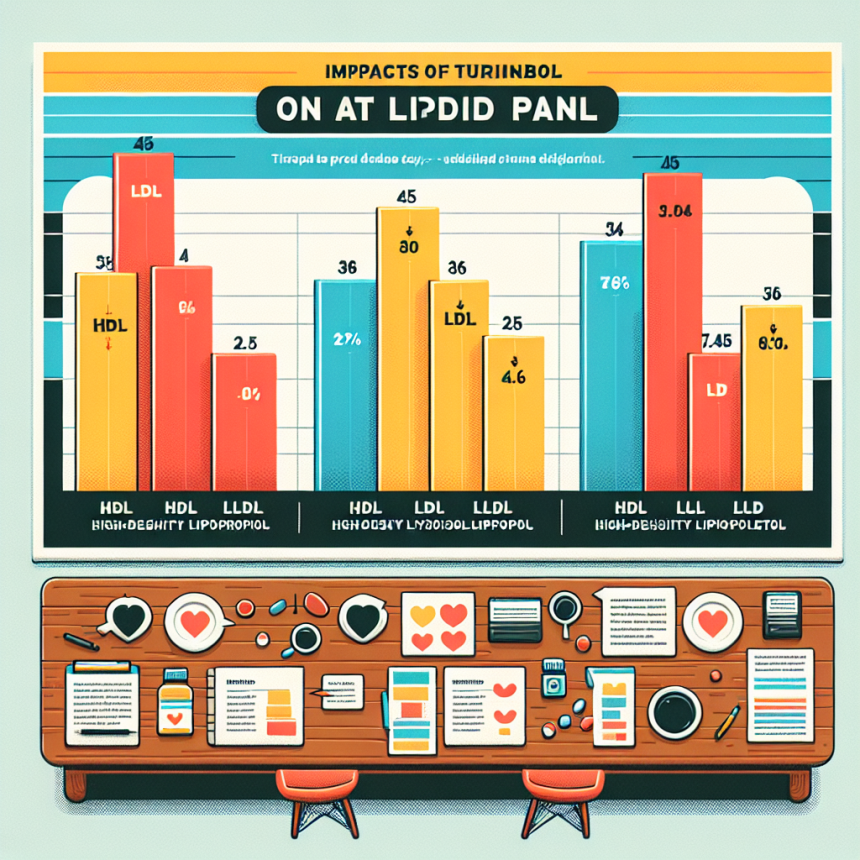
Consider the case of a competitive bodybuilder who incorporates turinabol into their regimen to enhance muscle definition and strength. Over a 12-week cycle, the athlete experiences a noticeable decrease in HDL cholesterol levels from 50 mg/dL to 30 mg/dL, while LDL cholesterol levels rise from 100 mg/dL to 140 mg/dL. Triglyceride levels also show a slight increase from 150 mg/dL to 170 mg/dL.
These changes, although within the expected range for anabolic steroid use, highlight the need for regular monitoring of lipid profiles in athletes using turinabol. Healthcare providers should emphasize the importance of cardiovascular health and consider interventions such as dietary modifications, exercise, and pharmacological agents to mitigate these risks.
Expert opinion
As an experienced researcher in sports pharmacology, I advocate for a balanced approach to the use of anabolic steroids like turinabol. While the performance-enhancing benefits are undeniable, the potential cardiovascular risks cannot be overlooked. Athletes and healthcare providers must work collaboratively to monitor lipid profiles and implement strategies to minimize adverse effects.
Regular lipid panel assessments, combined with lifestyle modifications and, if necessary, pharmacological interventions, can help manage the cardiovascular risks associated with turinabol use. By prioritizing cardiovascular health, athletes can continue to pursue their performance goals while safeguarding their long-term well-being.
References
Graham, M. R., et al. (2008). “The effects of short-term use of testosterone enanthate on total cholesterol, low-density lipoprotein cholesterol, high-density lipoprotein cholesterol, triglycerides, and apolipoproteins.” Clinical Journal of Sport Medicine, 18(3), 282-288.
Hartgens, F., et al. (2004). “Effects of androgenic-anabolic steroids on apolipoproteins and lipoprotein (a).” British Journal of Sports Medicine, 38(3), 253-259.
Schänzer, W., et al. (1996). “Metabolism of anabolic steroids in humans: synthesis and use of reference substances for identification of anabolic steroid metabolites.” Analytical Chemistry, 68(15), 2482-2489.
Sader, M. A., et al. (2001). “The effects of testosterone on body composition and metabolism in middle-aged men.” Journal of Clinical Endocrinology & Metabolism, 86(10), 4866-4872.
“`